ANGELA M. HOUSAND, PH.D.
  • Welcome
  • Time & Place
  • Vita
  • Edufest 2022

Survival on Mars 

INSTRUCTIONS:  Below you will find 15 technological innovations from the past year. You are playing the role of an Angel Investor who funds projects for the advancement of society and the human race. For each of the technological innovations below you will:
  1. Rank order each innovation for its' importance to the process of colonizing Mars.
  2. Provide your reason for the ranking of each innovation.
  3. Select 3 innovations that are fundamental to the success of the goal of colonizing Mars and feasible to adapt to the intended purpose of colonizing Mars (these will be the three innovations you will fund, so make sure you can explain your decision making process).
Picture
Rank:

Reason:
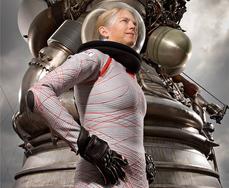
Compression Space Suit
  • Location: Cambridge, MA
  • Who’s Working on it: MIT
  • Field: Aerospace Engineering
Dr. Dava Newman, a professor of Aeronautics, Astronautics and Engineering Systems at MIT,created compression garments that incorporate small, springlike coils that contract in response to heat to improve upon the outdated, clunky spacesuits astronauts currently wear.

Picture
Rank: 

Reason:
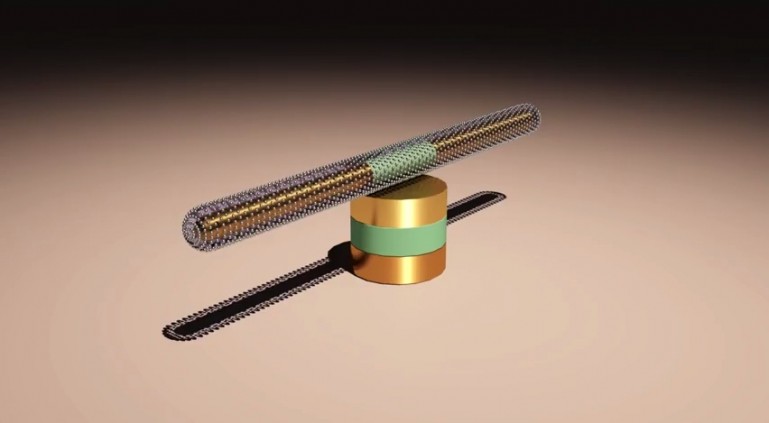
World’s Smallest, Fastest Nanomotor
  • Location: Austin, TX
  • Who’s Working on it: University of Texas at Austin
  • Field: Mechanical Engineering
The smallest, fastest, and longest-running tiny synthetic motor to date. The team’s nanomotor is an important step toward developing miniature machines that could one day move through the body to administer insulin for diabetics when needed, or target and treat cancer cells without harming good cells.


Picture
Rank:

Reason:
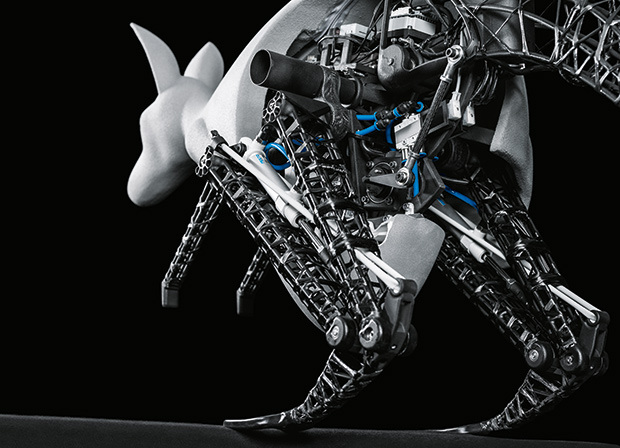
Robot Cheetahs and Kangaroos
  • Location: Arnstadt, Germany and Cambridge, MA
  • Who’s Working on it: Festo AG and MIT
  • Field: Mechanical Engineering

Scientists at Festo AG of Germany developed a “BionicKangaroo,” that technologically reproduces the unique way a kangaroo moves. Bonus: You can summon it with simple arm gestures! Stateside MIT’s Biomimetic Robotics Laboratory developed “an algorithm for bounding that they’ve successfully implemented in a robotic cheetah.” At the moment it’s clocking in at 10 mph but they expect this same model will eventually reach 30 mph, or about half the speed of a cheetah in the wild.
Picture
Rank:

Reason:
Significant Increase in Solar Energy Efficiency
  • Location: Australia & Germany
  • Who’s Working on it: University of NSW & Fraunhofer Institute for Solar Energy
  • Field: Solar Engineering
Engineers achieved a record breaking 40.4% - 44.7% “conversion efficiency”.

Picture
Rank:

Reason:
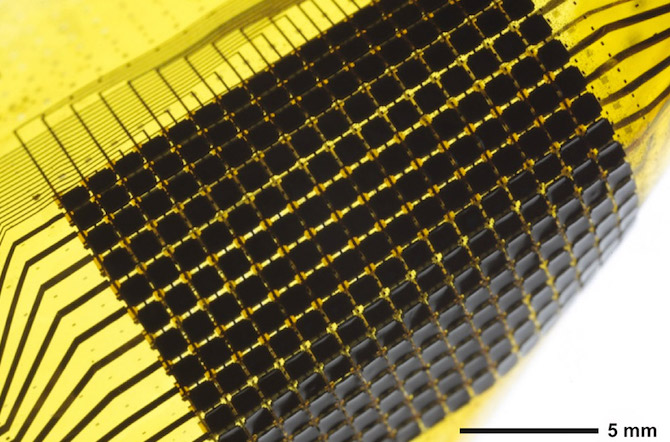
Squid-Inspired Autonomous Camouflage
  • Location: Houston, TX
  • Who’s Working on it: University of Houston, University of Illinois, Northwestern University
  • Field: Mechanical Engineering
Cephalopods (squid, octopi, cuttlefish) are able to change coloration quickly for camouflage. Dr. Cunjiang Yu, a mechanical engineer from the University of Houston, led a collaborative study to replicate this pattern through manufactured camouflage. The flexible skin of the device is comprised of ultrathin layers, combining semiconductor actuators, switching components and light sensors with inorganic reflectors and organic color-changing materials in such a way to allow autonomous matching to background coloration.

Picture

Rank:

Reason:
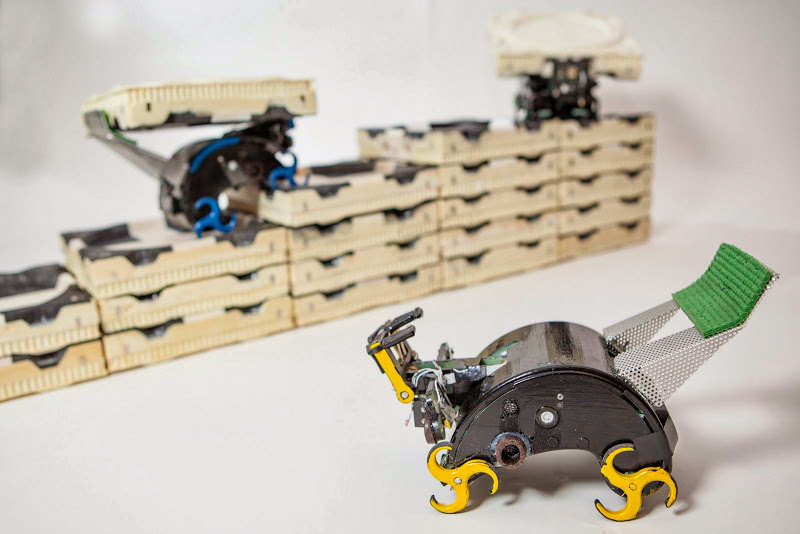
Swarm Robots Mimic Termites; Build Things Without Being Instructed
  • Location: Cambridge, MA
  • Who’s Working on it: Harvard
  • Fields: Computer Engineering, Mechanical Engineering
The Harvard School of Engineering and Applied Sciences has created an autonomous robotic construction crew that mimics the behaviors of termites. Per the Harvard Gazette:
The system needs no supervisor, no eye in the sky, and no communication. It uses simple robots — any number of robots — that cooperate by modifying their environment.Harvard’s TERMES system demonstrates that collective systems of robots can build complex, 3-D structures without requiring a central command structure or prescribed roles.
Picture
Picture
Rank:

Reason:
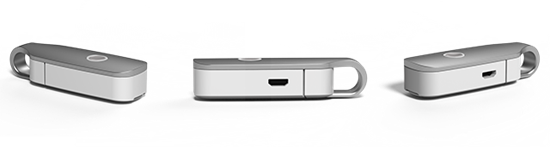
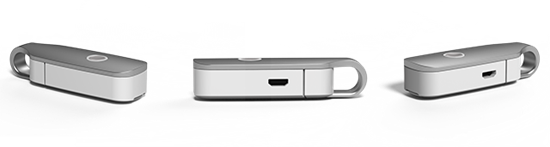
Pocket Molecular Detector
  • Location: Herzliya, Israel
  • Who’s Working on it: Consumer Physics, Inc.
  • Fields: Chemical Engineering, Electrical Engineering, Software Engineering
SCiOio will analyzin food, medication, and plants. It can be used to refine the ingredients for production or figure out if authenticity of organic materials. Soon, the ability to check samples from cosmetics, clothes, flora, soil, jewels, precious stones, leather, rubber, oils, plastics, and even human tissue or bodily fluids will be added.
Picture


Rank:

Reason:
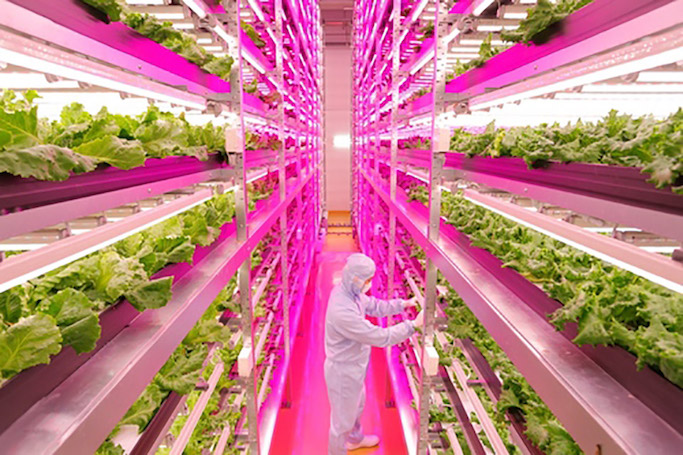
Largest Indoor Farm Built
  • Location: Japan
  • Who’s Working on it: Mirai
  • Field: Agricultural Engineering
Run by a plant physiologist, Mirai has indeed built the world’s largest indoor farm — 25,000 square feet to be exact — in an old semiconductor factory. The gardens are fed with 17,500 LED lights in a bacteria-free, pesticide-free environment. 
  • This farm produces faster, more, and with less waste (of both water and product).
  • Produce is grown under these LEDs 2.5x faster than in sunlight.
  • They’ve reduced produce loss from an industry-standard 30-40% to less than 3%.
  • This farm cuts water usage to 1 percent.
  • Produces about 10,000 heads of fresh lettuce each day.
Picture
Rank:

Reason:
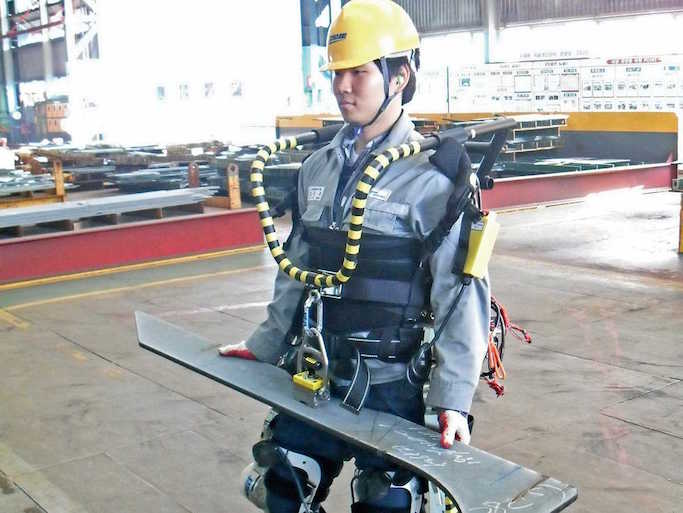
Daewoo Morphs Workers into RoboShipBuilders
  • Location: South Korea
  • Who’s Working on it: Daewoo
  • Fields: Mechanical Engineering, Electrical Engineering
Ship workers are turned into superman that can pick up and carry 100-kilogram hunks of metal with robotic exoskeletons? The prototype robo-suits weigh a tad under 62 pounds and can accommodate anyone from 5-foot-3 to 6-feet tall. Users can walk at their normal gait and get assistance from the suit in lifting and moving objects that weigh up to 66 pounds during the suit’s three-hour battery life. Engineers have ambitions of eventually getting total lifting capacity to 220 pounds.

Picture
Rank:

Reason:
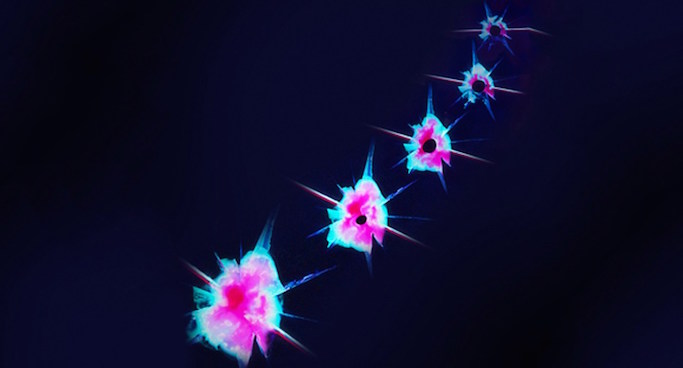
Self-Healing Plastic
  • Location: Champaign, IL
  • Who’s Working on it: University of Illinois
  • Field: Chemical Engineering
Engineers at the University of Illinois has unveiled a polymer that automatically patches holes 3cm wide – more than 100 times larger than previous milestones. The polymer relies on a network of capillaries similar to a human blood clotting system that deliver chemicals to the damaged areas. The materials used to create this polymer are inexpensive and readily available.
Picture
Rank:

Reason:
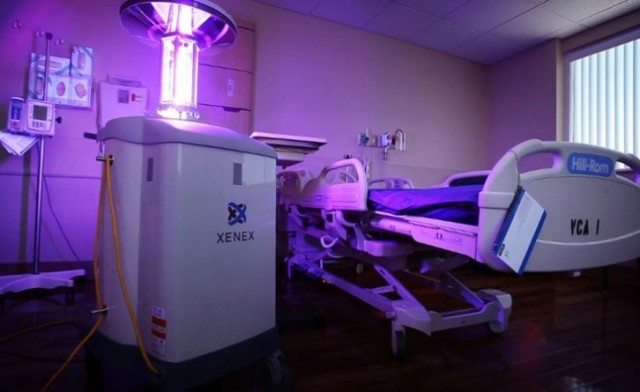
Germ-Zapping Robot 
  • Location: San Antonio, TX
  • Who’s Working on it: Xenex
  • Fields: Electrical Engineering, Biomedical Engineering
The Xenex as “essentially a tall Roomba” with an ultraviolet light. But the germ-killing robot that bathes hospital rooms with intense, millisecond pulses of ultraviolet light from a high-wattage strobe light is a hot item this year. The light is capable of killing germs in an entire hospital room in 5 minutes – and will destroy Ebola, specifically, on any surface in 2 minutes.
Picture
Rank:

Reason:
43 Terabits/Sec Data Transfer
  • Location: Denmark
  • Who’s Working on it: Technical University of Denmark
  • Field: Electrical Engineering

The High-Speed Optical Communications team at the Technical University of Denmark set a new record for data transmission this year, passing 43 terabits per second worth of data over a single optical fiber. To put this in perspective, reddit user candiedbug points out:
         At 43 terabits per second you could download Netflix’s entire 3.14 petabyte library in 9.7 minutes.
Picture
Rank:

Reason:
MacGyver Paradigm
  • Location: Atlanta, GA & Tokyo, Japan
  • Who’s Working on it: Georgia Tech & the National Institute of Advanced Industrial Science and Technology (Japan)
  • Fields: Mechanical Engineering, Electrical Engineering
Autonomous robot, MacGyver, is different than most robots. Where most robots have been built to treat the environment around them as an obstacle to be avoided, this robot uses its environment. Autonomously.
In one experiment, MacGyver completes a rescue scenario with a 100 kg brick object blocking entry to a room and another 100 kg loaded cart. Interestingly, the loaded cart becomes a fulcrum for an arbitrary board to topple the bricks. Then the bricks, which were initially an obstacle, are used as a fulcrum for a lever to pry open the door. Finally the robot uses a wider board to create a bridge and perform the simulated rescue. See video: https://www.youtube.com/watch?v=ZwwS4YOTbbw

Picture
Rank:

Reason:
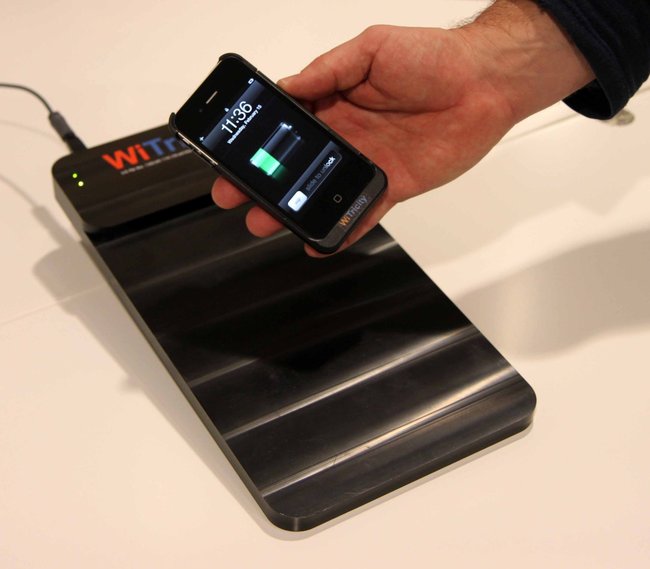
Wireless Electricity
  • Location: Watertown, MA
  • Who’s Working on it: WiTricity
  • Field: Electrical Engineering
Resonant wireless power transfer technology is highly efficient – by some estimates 90% efficient. It’s based on magnetic resonance instead of induction, you don’t have to place the devices directly on a pad for the power transfer — they can be placed around the pad, and it even works through various materials like wood and metal. Also, you can charge up multiple devices with a single transmitter, and you can add repeater pads — which can come in the form of floor mats — should one require an extended range.
Picture
Rank:

Reason:
Solar Power can be Generated in the Dark
  • Location: Cambridge, MA
  • Who’s Working on it: MIT and Harvard
  • Fields: Solar Engineering, Materials Engineering
Generating energy is far easier than storing it (outside of liquid fuel form). That has been the primary obstacle to widespread adoption of solar technology – but recently researchers from MIT and Harvard used a photoswitching substance called azobenzene to create carbon nanotubes capable of absorbing the sun’s radiation and storing it in chemical form. And once stored on the molecular level, it can be tapped at will to generate heat on demand. Even in the dark.  The molecules can store the heat forever and be endlessly re-used while emitting absolutely no greenhouse gases.

Taken and adapted from: Amanda Orson. The 20 Greatest Engineering Feats of 2014. EngineerJobs.com

Powered by Create your own unique website with customizable templates.
  • Welcome
  • Time & Place
  • Vita
  • Edufest 2022